
The Benefits of Laser Engraving for Machined Parts in Manufacturing
Laser engraving has become a key process in manufacturing, especially when it comes to marking machined parts. This technique offers precision, durability, and flexibility that traditional marking methods struggle to match. For machinists, laser engravers, and manufacturers, understanding how laser engraving enhances machined parts can improve product quality and traceability.

How Laser Engraving Works on Machined Parts
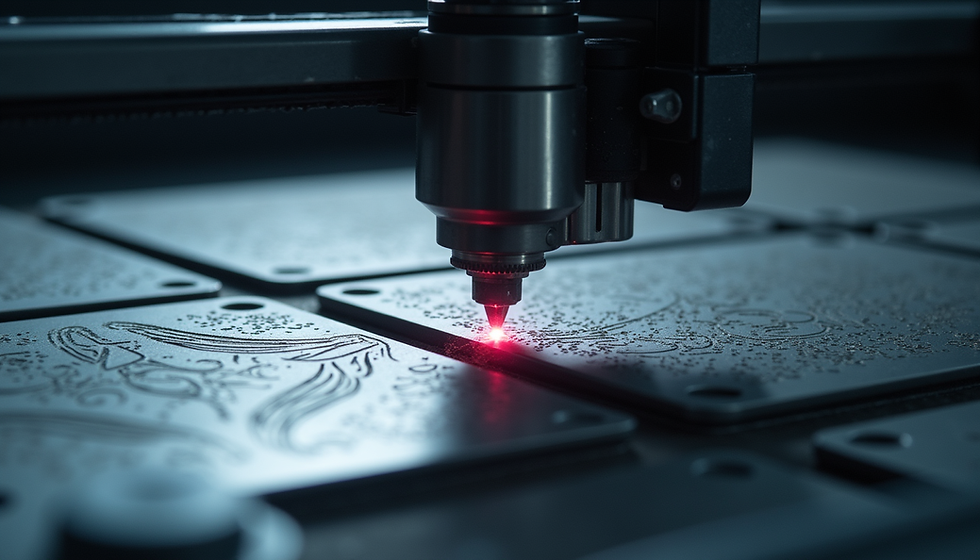
Laser engraving uses a focused beam of light to remove material from the surface of a part, creating permanent marks. The laser’s intensity and speed can be adjusted to engrave various materials, including metals, plastics, and composites. Unlike mechanical engraving, laser engraving does not physically touch the part, reducing wear on tools and the risk of damage.
This non-contact process allows for:
High precision: Laser beams can create fine details down to microns.
Consistent depth: Each mark is uniform, improving readability.
Minimal heat impact: Controlled laser power prevents warping or weakening of parts.
Machined parts engraving often requires marking serial numbers, logos, or specifications. Laser engraving meets these needs with speed and accuracy, making it ideal for high-volume production.
Advantages of Laser Engraving in Manufacturing
Durability and Resistance
Laser-engraved marks are permanent and resistant to wear, chemicals, and heat. This durability is crucial for parts exposed to harsh environments or frequent handling. For example, aerospace components engraved with laser markings maintain legibility after exposure to extreme temperatures and cleaning solvents.
Traceability and Quality Control
Manufacturers rely on clear, permanent markings to track parts through production and service life. Laser engraving supports traceability by enabling:
Unique serial numbers
Barcodes and QR codes
Date codes and batch information
These markings help identify parts quickly during inspections or recalls, reducing errors and improving quality control.
Flexibility and Customization
Laser engraving systems can switch between designs without changing tools. This flexibility allows manufacturers to customize parts easily, whether for branding or compliance with industry standards. For example, a company can engrave different logos or certification marks on the same type of part without downtime.
Cost-Effectiveness Over Time
While initial investment in laser engraving equipment can be significant, the long-term savings are notable. The process reduces the need for consumables like ink or labels and lowers labor costs due to automation. Additionally, fewer rejected parts result from consistent, high-quality markings.
Practical Applications of Laser Engraving on Machined Parts
Automotive Industry
In automotive manufacturing, laser engraving is used to mark engine components, chassis parts, and electronic modules. These marks ensure parts are correctly identified during assembly and maintenance. For example, engine blocks often have laser-engraved serial numbers that remain readable despite exposure to oil and heat.
Medical Device Manufacturing
Medical devices require precise and permanent markings for safety and regulatory compliance. Laser engraving on surgical instruments and implants provides clear identification without compromising material integrity. The ability to engrave on small, complex shapes is a significant advantage in this field.

Aerospace and Defense
Parts used in aerospace and defense must meet strict standards for traceability and durability. Laser engraving ensures that critical components carry permanent identification codes that survive extreme conditions. This capability supports maintenance schedules and safety audits.
Electronics and Industrial Equipment
Laser engraving marks circuit boards, connectors, and housings with part numbers and compliance symbols. These marks help technicians identify components quickly during repairs or upgrades. The precision of laser engraving also supports miniaturized electronics where space for markings is limited.
Tips for Successful Machined Parts Engraving
Choose the right laser type: Fiber lasers work well on metals, while CO2 lasers suit plastics.
Optimize laser settings: Adjust power, speed, and frequency for the material and desired depth.
Prepare the surface: Clean and smooth surfaces improve engraving quality.
Test on sample parts: Trial runs help avoid errors and ensure readability.
Integrate with production: Automate engraving within manufacturing lines for efficiency.

Comments