
How a Laser Engraver Can Precisely Engrave Metal Parts
Laser engraving has transformed the way metal parts are customized and marked. Unlike traditional methods, laser engraving offers unmatched precision, speed, and flexibility. For anyone working with metal components, understanding how a laser engraver operates and what makes it ideal for engraving metal parts can open new possibilities for design and manufacturing.
What Makes Laser Engraving Ideal for Metal Parts
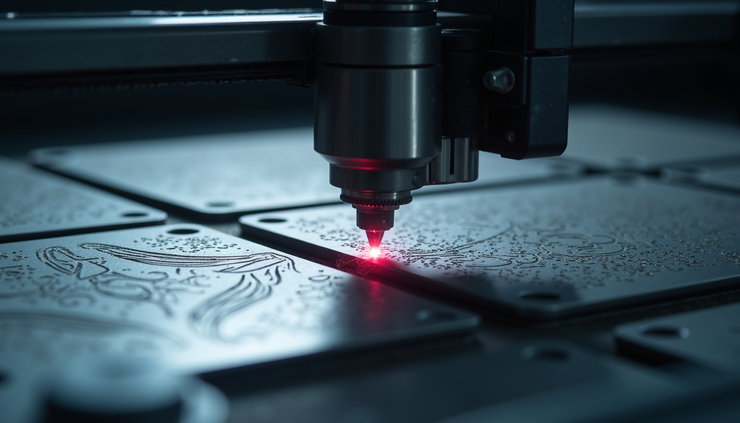
Laser engraving uses a focused beam of light to remove material from the surface of a metal part. This process creates permanent marks without physical contact, which reduces wear on tools and avoids distortion of the metal. Key advantages include:
High precision: The laser beam can be controlled to micrometer accuracy, allowing for fine details and complex designs.
Speed: Laser engraving can mark metal parts quickly, improving production efficiency.
Versatility: It works on various metals such as stainless steel, aluminum, brass, and titanium.
Durability: The marks are resistant to wear, corrosion, and heat, making them ideal for industrial applications.
These benefits make laser engraving a preferred choice for industries like aerospace, automotive, medical devices, and custom manufacturing.
How the Laser Engraving Process Works on Metal
The process begins with a digital design created in software. This design guides the laser engraver on where to apply the beam. The laser emits a concentrated light beam that heats and vaporizes the metal surface in a controlled manner. The depth and style of engraving depend on several factors:
Laser power: Higher power allows deeper engraving.
Speed of the laser head: Slower speeds increase the depth of the mark.
Pulse frequency: Adjusting pulses changes the texture and clarity.
Type of metal: Different metals absorb laser energy differently, affecting the engraving quality.
The laser can create various effects, from shallow surface marks to deep grooves. It can also produce color changes on some metals by altering the surface oxide layer, adding another dimension to engraving metal parts.
Types of Laser Engravers Used for Metal
Several types of lasers are commonly used for engraving metal parts:
Fiber lasers: These are the most popular for metal engraving due to their high efficiency and ability to produce fine details. They operate at wavelengths well absorbed by metals.
CO2 lasers: While excellent for organic materials, CO2 lasers are less effective on metals unless combined with special coatings.
Nd:YAG lasers: These solid-state lasers are used for deeper engraving and marking on metals but are generally slower than fiber lasers.
Choosing the right laser depends on the metal type, desired engraving depth, and production volume.
Practical Applications of Laser Engraving on Metal Parts
Laser engraving is used in many real-world applications, including:
Serial numbers and barcodes: For traceability in manufacturing and quality control.
Logos and branding: Permanent marks on tools, machinery, and consumer products.
Decorative designs: Custom patterns on jewelry, watches, and metal art.
Functional markings: Measurement scales, calibration marks, and assembly instructions.
For example, aerospace companies use laser engraving to mark parts with identification codes that withstand extreme conditions. Medical device manufacturers engrave surgical tools with precise labels that resist sterilization processes.
Tips for Achieving the Best Results in Engraving Metal Parts
To get the most out of laser engraving on metal, consider these tips:
Clean the metal surface before engraving to remove oils and dirt.
Test settings on scrap material to find the optimal power and speed.
Use the right laser type for the metal and desired effect.
Maintain the laser equipment regularly to ensure consistent performance.
Design with engraving in mind, avoiding overly fine details that may not translate well.
Following these practices helps produce clear, durable, and attractive engravings.
Common Challenges and How to Overcome Them
Engraving metal parts with a laser can present challenges such as:
Reflective surfaces: Metals like aluminum can reflect the laser beam, reducing efficiency. Using fiber lasers or applying a thin coating can help.
Heat buildup: Excessive heat can warp thin metal parts. Adjusting laser power and speed minimizes this risk.
Inconsistent depth: Uneven surfaces cause variable engraving depth. Proper fixturing and surface preparation improve results.
Understanding these issues and how to address them ensures high-quality engraving every time.
Future Trends in Laser Engraving Metal Parts
Advances in laser technology continue to improve engraving capabilities. Emerging trends include:
Higher power fiber lasers for faster processing.
Automation integration for mass production.
3D laser engraving that adds texture and depth beyond flat surfaces.
Eco-friendly processes reducing energy consumption.
These developments will expand the applications and efficiency of laser engraving metal parts.

Comments