
Revolutionizing 3D Printing: How 3D Scanners Enable Effortless Reverse Engineering of Complex Parts
The ability to recreate physical objects digitally has transformed manufacturing and design. Among the most powerful tools enabling this change is the 3D scanner. By capturing precise measurements of existing parts, 3D scanners make reverse engineering easier than ever before. This process allows users to reproduce almost any geometry, no matter how complex, and then bring those designs to life through 3D printing. This post explores how 3D scanning simplifies reverse engineering, the benefits it offers, and practical examples of its use in modern 3D printing workflows.

How 3D Scanners Work in Reverse Engineering
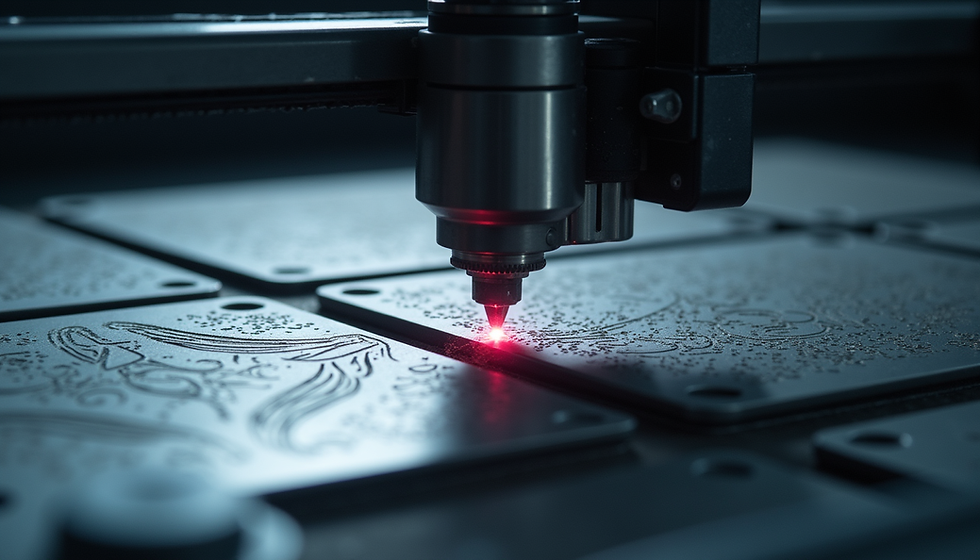
3D scanners use various technologies such as laser triangulation, structured light, or photogrammetry to capture the shape of an object. The scanner collects thousands or millions of data points, called a point cloud, representing the surface geometry. This data is then processed into a 3D model that can be edited or directly used for 3D printing.
The process typically involves:
Scanning the part: Positioning the scanner around the object to capture all angles.
Data processing: Cleaning and aligning the point cloud data to create a complete model.
Model refinement: Using CAD software to repair, smooth, or modify the scanned model.
3D printing preparation: Converting the model into a printable file format and slicing it for printing.
This workflow allows users to recreate parts without original design files, making it invaluable for legacy components, custom modifications, or damaged items.
Why 3D Scanning Makes Reverse Engineering Easier
Before 3D scanners became accessible, reverse engineering required manual measurements, sketches, and guesswork. This was time-consuming and prone to errors, especially for complex shapes. Today, 3D scanners simplify the process by:
Capturing intricate details quickly: Even complex curves, textures, and internal features can be recorded accurately.
Reducing human error: Automated data collection minimizes mistakes from manual measurement.
Speeding up design iterations: Digital models can be modified and tested rapidly.
Supporting diverse materials and sizes: Scanners can handle everything from tiny mechanical parts to large industrial components.
The ease of capturing almost any geometry means designers and engineers can focus on innovation rather than measurement challenges.
Examples of Reverse Engineering with 3D Scanners and 3D Printing
Restoring Vintage or Obsolete Parts
Many industries rely on parts no longer in production. For example, classic car restorers use 3D scanners to capture worn or broken components. They then create precise digital models to print replacement parts that fit perfectly, preserving authenticity and function.
Customizing Medical Devices
Orthopedic specialists scan patient anatomy to design custom implants or prosthetics. The accurate 3D models ensure a perfect fit, improving comfort and performance. This approach also speeds up production compared to traditional molding techniques.
Improving Product Design
Manufacturers scan competitor products or their own prototypes to analyze shapes and dimensions. This data helps refine designs, test modifications, or create new versions with enhanced features.
Creating Complex Assemblies
Some parts have intricate internal geometries that are difficult to measure manually. 3D scanners capture these details, enabling the printing of assemblies that would otherwise be impossible to replicate.
Tips for Getting the Best Results with 3D Scanners
Choose the right scanner: Different technologies suit different applications. For example, laser scanners excel at capturing fine details, while structured light scanners work well for larger objects.
Prepare the object: Clean surfaces and apply matte sprays if needed to reduce reflections that can interfere with scanning.
Scan from multiple angles: Ensure full coverage to avoid gaps in the model.
Use quality software: Post-processing tools are essential for aligning scans, filling holes, and optimizing models for printing.
Test print prototypes: Printing a test version helps identify any issues before final production.
The Future of Reverse Engineering and 3D Printing
As 3D scanning technology advances, it becomes more affordable and user-friendly. Portable scanners and smartphone apps are making it possible for hobbyists and small businesses to reverse engineer parts with minimal investment. Meanwhile, improvements in software automation reduce the need for expert knowledge in model editing.
This progress means that almost any geometry can be recreated and printed, opening new possibilities for repair, customization, and innovation. The combination of 3D scanning and printing is reshaping how we approach manufacturing and design, making it more accessible and flexible.

Comments