
How Affordable 3D Printing Materials Make Large Scale Production Competitive with Traditional Methods
The cost of materials has long been a major factor in deciding which manufacturing method to use for plastic parts. Traditional plastic part manufacturing methods like injection molding have dominated large scale part production because of their low per-unit cost at high volumes. Yet, recent advances in 3d printing materials have dramatically lowered costs, making large scale 3d printing a viable competitor. This post explores how affordable 3d printing materials are reshaping the economics of plastic part manufacturing and enabling new opportunities for manufacturers and designers.
The Traditional Cost Structure of Plastic Part Manufacturing
Plastic part manufacturing has relied heavily on methods like injection molding, blow molding, and extrusion. These processes require expensive molds and tooling, which can cost tens of thousands of dollars or more. The high upfront investment means manufacturers need to produce large volumes to spread out costs and achieve low per-part prices.
Tooling costs: Injection molds can cost $10,000 to $100,000 depending on complexity.
Setup time: Designing and fabricating molds takes weeks to months.
Material costs: Raw plastic pellets are relatively inexpensive, often under $2 per kilogram.
Per-part cost: Drops significantly with volume, sometimes below $0.10 per part at scale.
This cost structure favors very large production runs but limits flexibility. Changes to part design require new molds, adding time and expense. Small to medium runs become costly and slow.
How 3D Printing Materials Have Become More Affordable
3d printing materials have evolved rapidly over the past decade. Early 3d printing resins and filaments were expensive specialty products, limiting use to prototyping and low-volume parts. Today, the market offers a wide range of affordable materials suitable for functional plastic parts.
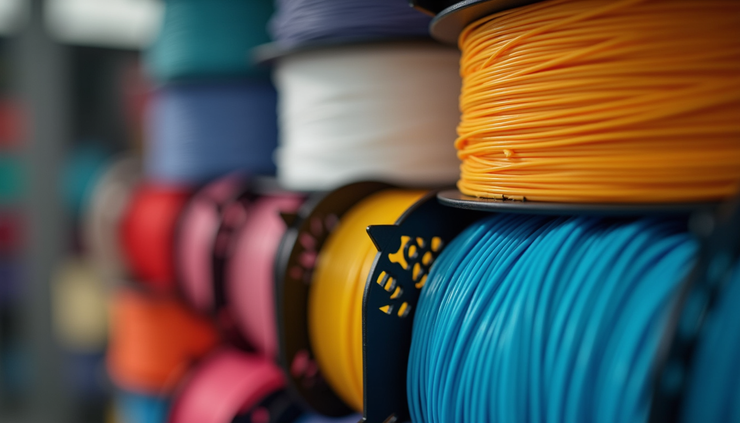
Filament prices: Common 3d printing filaments like PLA, ABS, and PETG now cost between $15 and $30 per kilogram, with bulk purchasing lowering prices further.
Resin costs: Photopolymer resins for SLA and DLP printers have dropped to $50-$100 per liter, with industrial resins available at competitive rates.
Material variety: Options include flexible, high-strength, heat-resistant, and composite filaments, expanding application possibilities.
Recyclability and waste reduction: 3d printing uses only the material needed, reducing waste compared to subtractive methods.
These price drops make it possible to consider 3d printing for larger production volumes without prohibitive material costs.
Comparing Material Costs in Large Scale Part Production
When comparing the cost of materials for large scale part production, 3d printing materials are no longer a barrier. While injection molding raw materials remain cheaper per kilogram, the total cost picture changes when factoring in tooling, setup, and waste.
| Factor | Injection Molding | Large Scale 3D Printing |
|-------------------------|----------------------------|---------------------------------|
| Material cost per kg | $1.50 - $2.00 | $15 - $30 (filaments) |
| Tooling cost | $10,000 - $100,000+ | None |
| Setup time | Weeks to months | Hours to days |
| Waste | High (sprues, runners) | Minimal |
| Per-part cost at low volume | High | Competitive |
| Per-part cost at high volume | Low | Approaching parity |
For production runs under 10,000 parts, 3d printing can already be cost competitive when considering the total cost of ownership. As 3d printing speeds increase and materials become cheaper, this crossover point moves even lower.
Real-World Examples of Large Scale 3D Printing Cost Competitiveness
Several industries have demonstrated how affordable 3d printing materials enable large scale part production at competitive costs.
Automotive: Some manufacturers use 3d printing to produce thousands of custom interior parts annually. The ability to print on demand reduces inventory costs and material waste.
Consumer goods: Companies producing customized phone cases or household items use 3d printing to avoid mold costs and quickly respond to market trends.
Medical devices: Prosthetics and orthotics are increasingly 3d printed in large volumes with biocompatible materials, cutting lead times and costs.
In one case study, a company producing 5,000 plastic brackets switched from injection molding to 3d printing. They saved 40% on total costs by eliminating tooling expenses and reducing material waste, despite slightly higher filament costs.

Advantages Beyond Material Costs
Affordable 3d printing materials are just one part of why large scale 3d printing competes with traditional plastic part manufacturing. Other benefits include:
Design flexibility: Complex geometries and internal structures are possible without extra cost.
Customization: Each part can be unique without additional tooling.
Faster iteration: Changes can be implemented quickly without waiting for new molds.
Reduced inventory: On-demand production lowers storage needs and risk of obsolescence.
Sustainability: Less waste and potential for recycled materials improve environmental impact.
These advantages often translate into cost savings and improved product quality that offset any remaining material price differences.
Challenges and Considerations
Despite progress, some challenges remain for large scale 3d printing in plastic part manufacturing:
Print speed: Although improving, 3d printing is generally slower than injection molding for very high volumes.
Material properties: Not all 3d printing materials match the strength or finish of molded plastics.
Post-processing: Some parts require cleaning, curing, or surface finishing, adding time and cost.
Equipment investment: Industrial 3d printers can be expensive, though costs are falling.
Manufacturers must evaluate these factors alongside material costs to determine the best approach for their specific needs.
What the Future Holds for 3D Printing and Plastic Part Manufacturing
The trend toward affordable 3d printing materials will continue to reshape plastic part manufacturing. Advances in material science, printer technology, and automation will push costs down further and improve quality.
New materials: Development of cheaper, stronger, and more versatile filaments and resins.
Faster printers: Multi-head and continuous printing technologies will boost throughput.
Hybrid manufacturing: Combining 3d printing with traditional methods for optimal cost and performance.
Distributed production: Localized 3d printing hubs reduce shipping and inventory costs.
These changes will expand the role of 3d printing in large scale part production, making it a standard option alongside traditional methods.


Comments